452
452
Liquid Chromatography /LC/
06 February 2025, Thursday |
 452
452
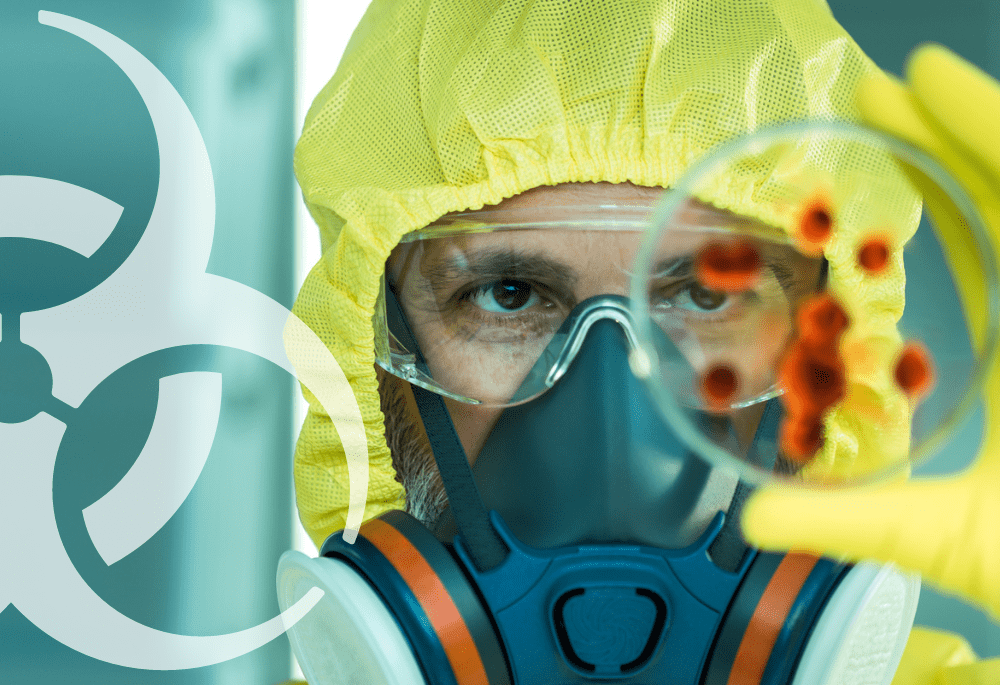
Protecting employees, the wider public and the environment is at the top of the list of things to consider when running a successful lab, especially in facilities that regularly handle infectious agents. Failure to implement and maintain stringent biosafety measures can lead to laboratory-acquired infections, which could be anything from a relatively benign gastrointestinal infection to contracting deadly viruses like Ebola. Of course, both good laboratory practices and standard microbial protocols can go a long way to preventing contamination, but particularly hazardous pathogens require much more comprehensive safety precautions.
Biorisk management
The inherent biorisk associated with any microbiological experiment depends entirely on the characteristics of the agent in question, including its capability to infect humans, the severity of the disease caused, and the existence of vaccines and effective treatments. The pathogen’s possible routes of transmission, infectious dose, environmental stability, host range, country of origin and genetic characteristics must also be taken into consideration. To complicate things further, it isn’t always possible to predict every possible adverse incident, and judgements must sometimes be made based on incomplete information. For example, clinical laboratories may not always know the exact organisms present in a sample they’re working on, since they are often looking to identify the causative agents in order to provide a medical diagnosis.
What are the different levels of Biosafety and associated pathogens?
Governing bodies use the above criteria to characterize hazardous agents, and sort them into distinct groups based on the risk they present, requiring labs to adhere to strict precautionary protocols for each risk class. The names and exact details of these categories – along with corresponding mitigative measures – vary according to territory but, in the US and EU, they are referred to as biosafety levels (BSLs) and are defined as follows:
BSL 1
This is the lowest biosafety level, and it is appropriate for labs working with low-risk microbes that pose little to no threat of infection in healthy adults, and so only require standard microbiological practices. Associated pathogens include:
Aspergillus niger
Bacillus subtilis
Agrobacterium radiobacter
Escherichia coli
Chickenpox
BSL 2
This applies to all labs handling pathogens associated with human diseases that pose a moderate risk to personnel and the environment. These agents can generally be handled safely on an open bench, provided the potential for producing splashes and aerosols is low. However, because of their potential to cause human disease, care must taken to prevent percutaneous injury, ingestion and mucous membrane exposure. Associated pathogens include:
H. influenzae
HIV
Hepatitis B virus
Mycobacterium
Streptococcus pneumonia
Salmonella
Choleraesuis
Toxoplasma
523

.jpeg)